
Master of Interior Architecture

Duration
1 year

Start Date
September 2027*

Tuition Fee
€ 1,181.40 (EEA)
€ 3,900 (non-EEA)

Location
Hasselt, Belgium
* Application Deadlines
Non-EEA Applicants – March 15
EEA Applicants – August 15
Students holding a Belgian academic Bachelor in Interior Architecture are granted direct admission and may register until September 14.
Programme in short
The Master of Interior Architecture is designed for students who want to rethink how existing buildings can be transformed for contemporary use. Instead of designing from scratch, at Hasselt University you learn to work creatively with what is already there – heritage sites, industrial structures, public buildings, and more. The programme blends artistic exploration with sustainable thinking, focusing on how thoughtful design can breathe new life into spaces and communities.
What can you expect?
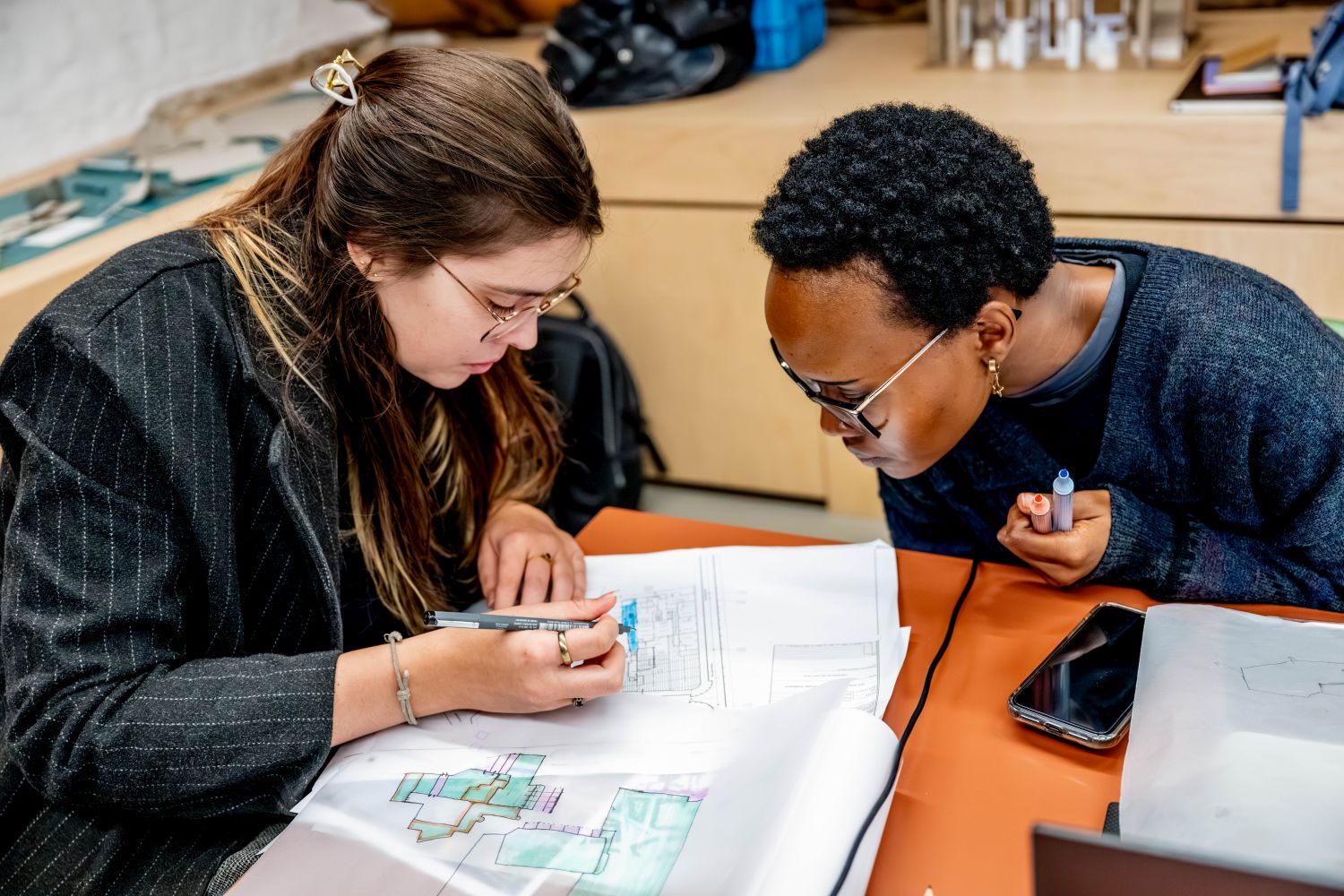
The programme combines design studios, workshops, and research-based courses that introduce you to adaptive reuse theories, materiality, construction techniques, and spatial analysis. At Hasselt University, you work on real transformation challenges, guided by experts and supported by strong design methodologies. Studio projects allow you to experiment, innovate, and develop your own design identity while collaborating with peers from diverse backgrounds. Through excursions, lectures, and interdisciplinary teamwork, you gain insight into how existing buildings can be approached with creativity, respect, and a strong vision for the future.
Specialisations
Choose one of two tracks to focus your studies
The Master of Interior Architecture offers two distinctive tracks: Adaptive Reuse and Responsible Retail Design. Both combine design, research, and theory, but approach contemporary challenges in interior architecture from different perspectives.
Choose the track that best matches your interests and the type of environments and design challenges you want to explore.
Adaptive Reuse
Exploring spatial potentialities & the poetics of the existing
Adaptive Reuse focuses on the transformation and adaptation of existing buildings and sites. Demographic, economic and ecological challenges are redefining the role of architecture, making transition and reuse increasingly central to architectural practice.
Rather than approaching preservation only through conservation or restoration, the track takes a designerly approach to the existing built environment. Students explore the beauty, memory, atmosphere, and hidden potential of buildings and sites, and investigate how these qualities can serve as the starting point for new uses and spatial interventions.
The faculty is ideally positioned in a region with a rich variety of historical sites and identities. These surroundings provide a living laboratory in which students can examine existing environments as layered places and develop new design strategies through research and experimentation.
The track is strongly embedded in the ongoing research on adaptive reuse by TRACE, part of the research group ArcK at the Faculty of Architecture and Arts
Responsible Retail Design
Creating meaningful retail experiences for a changing world
The Responsible Retail Design track focuses on the analysis, design and transformation of contemporary retail environments. Students work on real-world challenges ranging from stores and flagship concepts to hybrid environments that combine retail with hospitality, services, culture and community functions.
Research and theory courses introduce students to observation, mapping, behavioural analysis and context research, while exploring contemporary developments in retail through literature, research and international case studies. Professional practice, study visits and an international retail safari connect these perspectives to real-world challenges and broaden students’ professional frame of reference.
The track concludes with a master’s project and thesis in which students develop an original retail design proposal supported by independent research, potentially in collaboration with external stakeholders or within their own local context.
The track is strongly embedded in the ongoing research on retail design by the Retail Design Lab, part of the research group ArcK at the Faculty of Architecture and Arts
Your career prospects
Hasselt University graduates are ready to work as interior architects, spatial designers, design consultants, or project coordinators specialising in renovation, transformation, and adaptive reuse. Your ability to work thoughtfully with existing structures is highly valued by architectural studios, cultural institutions, research groups, and organisations focused on sustainable building strategies and the circular economy. Many graduates also develop careers in concept design, scenography, or independent creative practice.